Last updated: 14 September 2026
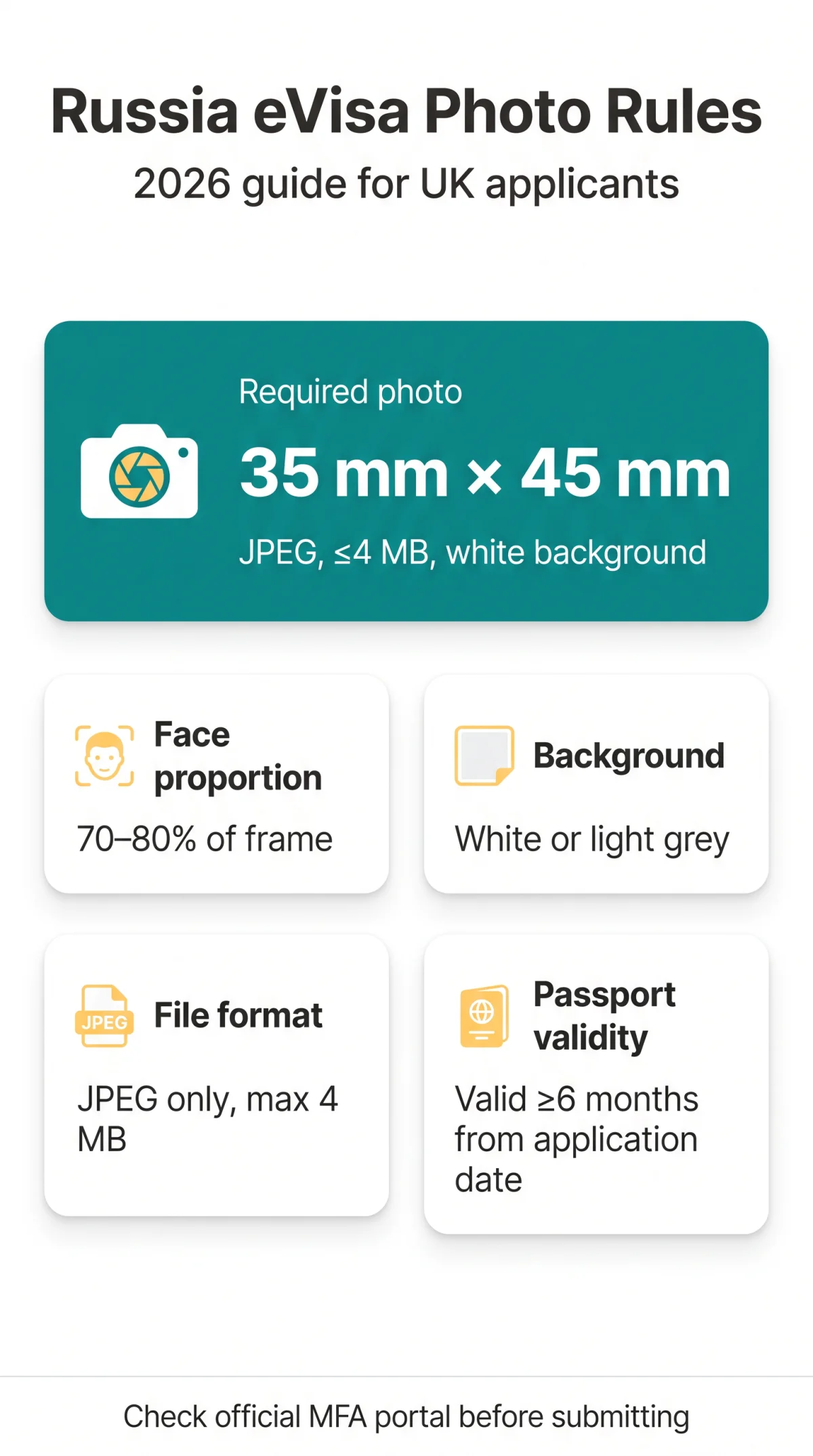
For a Russia eVisa application, UK applicants must upload a JPEG digital photo measuring 35 mm × 45 mm on a white or light grey background, with the face occupying 70 to 80% of the frame. Your passport must be valid for at least six months from the date you submit your application, not your travel date. This guide covers every specification you need to get your photo and passport documents right the first time. Applications can be rejected if any of these specifications are not met.
Russia eVisa Photo Specifications: Size, Format and Upload
The evisa russia photo requirements mandate a JPEG file measuring 35 mm × 45 mm, with a maximum file size of 4 MB on a plain white or light-grey background. The photograph must be taken within the last six months and reflect your current appearance. Note: the 35 × 45 mm dimensions naturally produce a 7:9 ratio; the system also accepts a 3:4 aspect ratio. For best results, upload at exactly 35 mm × 45 mm.
| Parameter | Value | Notes |
|---|---|---|
| Dimensions | 35 mm × 45 mm | Rectangular, no borders or frames |
| File format | JPEG | No PNG or other formats accepted |
| Max file size | 4 MB | Compress larger files before upload |
| Aspect ratio | 3:4 | System-accepted; 35 × 45 mm gives 7:9 natively |
| Face proportion | 70-80% of frame | Head centred, facing camera directly |
| Head height | 32-36 mm | Chin to top of head |
| Background | White or light grey | Plain, no patterns or shadows |
| Lighting | Uniform, even | No harsh shadows or glare on face |
| Photo recency | Taken within 6 months | Must reflect current appearance |
| Print resolution | 600 dpi minimum | For optional printable versions |
| Colour profile | Natural colours | No filters or retouching permitted |
Before uploading, verify all parameters above on the official Russian MFA eVisa portal. Any non-compliant file triggers automatic rejection, even when all other documents are valid. Selfies and camera portrait modes are not permitted.
Facial Expression, Head Position, Glasses and Headwear Rules
The evisa russia photo requirements mandate a neutral expression with eyes open and mouth closed, head centred and facing the camera directly with no tilt, and the face occupying 70-80% of the frame in a full-face view with both sides equally visible. The camera lens must be at eye level. The entire head, hair, neck and optionally upper shoulders must be visible.
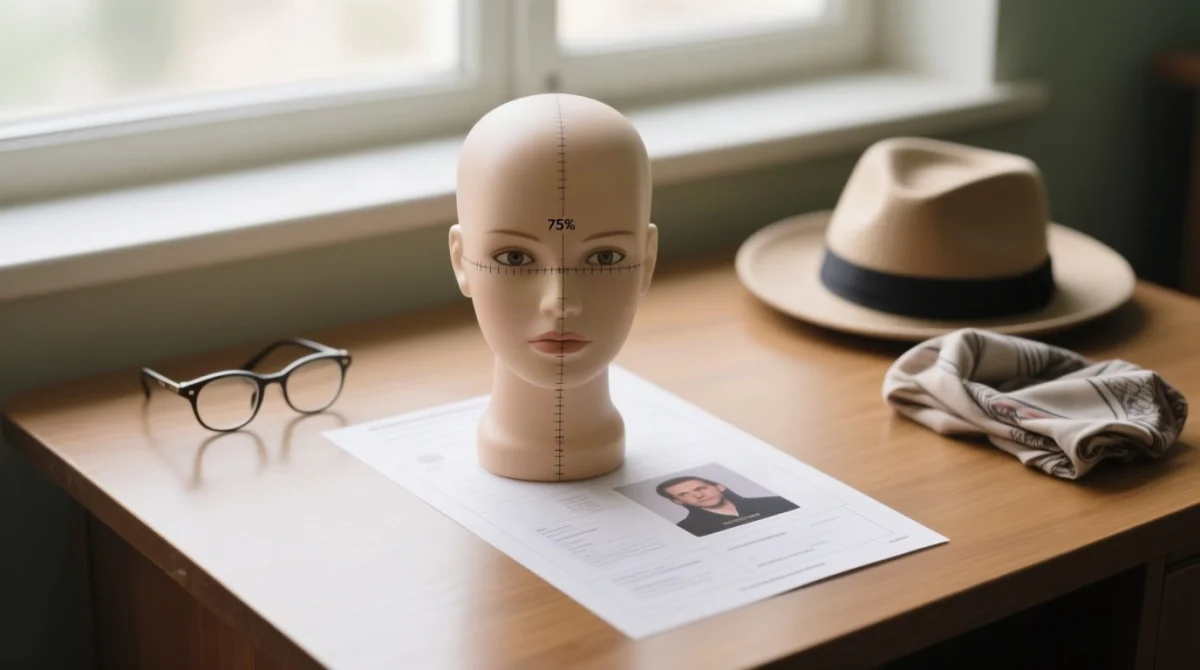
- Neutral expression only: mouth closed, eyes open and clearly visible, no hair across the eyes.
- Head straight, centred, no tilt or turn; camera lens at eye level.
- Glasses: recommended to remove; if worn, no glare, no tinted lenses, frames must not cover eyes. Sunglasses forbidden.
- Hats and headwear forbidden, except religious head coverings permitted when the face from chin to forehead is fully visible. Niqab forbidden.
- Beard permitted if normally worn; temporary beard growth prohibited. Natural makeup permitted; heavy altering makeup prohibited.
- Piercings and jewellery permitted if non-obscuring and non-glaring.
Passport Validity and Data Page Scanning for the eVisa
Your passport must remain valid for at least 6 months from the date you submit your eVisa application, not from your departure or entry date. For example, if you apply on 1 March 2026, your passport must stay valid until at least 1 September 2026. The passport must be machine-readable and contain sufficient blank pages for border crossing stamps. UK biometric passports satisfy the machine-readable requirement automatically. You can read more about Russia e-Visa validity and stay limits to plan your trip accordingly.
The data page upload must be a JPEG scan with the MRZ (Machine-Readable Zone) fully legible, no flash glare on the laminate, and no cropped edges. Applications are submitted via the Russian eVisa portal; always verify the latest rules on the official MFA portal before submitting.
Place your passport flat
Place your passport flat on a well-lit surface.
Use even lighting
Use even lighting and disable camera flash.
Capture the entire data page
Capture the entire data page rectangle, including MRZ lines at the bottom.
Check file format and size
Ensure the file is JPEG format and under 4 MB.
Verify legibility
Zoom in to verify all text and MRZ characters are legible before uploading.
eVisa Photo vs Regular Visa Photo and How to Avoid Rejection
The evisa russia photo requirements mandate a single digital JPEG upload, whereas a regular Russian consular visa requires 2-5 physical prints submitted at an embassy.
| Feature | eVisa Photo | Regular Visa Photo |
|---|---|---|
| Submission format | Digital (JPEG upload) | Physical prints |
| Quantity | 1 digital file | 2-5 identical prints |
| Dimensions | 35 × 45 mm | 35 × 45 mm |
| Resolution | Screen resolution sufficient; 600 dpi for optional print | 600 dpi minimum for print |
| Background | White or light grey | White or light grey |
| Submission channel | Online portal / mobile app | Embassy or consulate |
| Processing time | Up to 4 calendar days | 10-12 days (varies) |
Common rejection reasons: background shadows, glasses glare, face outside 70-80% of the frame, photo older than 6 months, and retouched or filtered images. If rejected, you receive an error notification within 2 calendar days of submission; correct and resubmit via your Personal Account, and a new timestamp applies to the 4-calendar-day processing period.
Special Cases: Children, Babies and Emergency Passports
Each child requires a separate eVisa application and separate e-visa, even infants travelling with parents. Children under 6 years of age are exempt from the consular fee. Infant photos must show the baby lying down from above with eyes open; supporting hands or objects must not be visible.
UK Emergency Travel Document holders: the eVisa system requires a machine-readable passport issued by the country of nationality. If your emergency document does not meet this requirement, contact the Russian consulate before applying. Dual nationals must declare and travel on the passport listed in the eVisa application; a mismatch results in visa revocation at the border. Damaged passports with torn pages, water damage, or loose laminate may also lead to border refusal.
FAQ: Russia eVisa Photo Requirements and Passport Rules
What size should a Russia eVisa photo be?
The photo must measure 35 mm × 45 mm with a 3:4 aspect ratio. The face must occupy 70 to 80% of the frame, and the head height from chin to top of head should be approximately 32 to 36 mm. The image must be rectangular with no borders, frames, or special corners.
Can I wear glasses in my Russia eVisa photo?
It is recommended to remove glasses. If worn, your eyes must be clearly visible with no glare on the lenses, no tinted or coloured lenses, and frames must not cover your eyes. Sunglasses are forbidden. Any shadows on the face caused by glasses frames will result in rejection.
How recent must my photo be for a Russia eVisa application?
The photo must be taken within the last six months of the application submission date and must reflect your current appearance. Using an older photo is a common rejection reason. It is advisable to take a new photo within days of submitting your application on the official portal.
What background colour does the Russia eVisa photo require?
The background must be plain white or light grey, free of patterns, shadows, foreign objects, and other visible persons. Uniform, even lighting is required on both sides of the face with no harsh shadows or glare.
What file format does the Russia eVisa photo upload need?
The photo must be a JPEG file with a maximum size of 4 MB and a 3:4 aspect ratio. A minimum resolution of 600 dpi is recommended for printable versions. The image must be in colour with natural colours and no filters, retouching, or artistic effects applied.
What happens if my Russia eVisa photo is rejected?
You will receive a notification within 2 calendar days of submission. The application is returned for editing via your Personal Account with indicated fields and comments. You must correct and resubmit, and the new submission timestamp applies to the 4-calendar-day processing period.
How long must my passport be valid for a Russia eVisa?
Your passport must be valid for at least 6 months from the date you submit your eVisa application, not from your departure or entry date. For example, if you apply on 1 March 2026, your passport must be valid until at least 1 September 2026. The passport must be machine-readable with sufficient blank pages for border stamps.
Can I apply for a Russia eVisa with an emergency passport?
The eVisa system requires a machine-readable passport issued by the country of nationality. UK Emergency Travel Documents may not meet this requirement. Contact the Russian consulate before applying to confirm eligibility.
Can I wear a headscarf in my Russia eVisa photo?
Religious head coverings are permitted if your face from chin to forehead is fully visible and unobscured. Hats and other head coverings are forbidden. Niqabs are not permitted because the full face must be visible. The covering must not create shadows on the face.
Do I need separate photos for each child applying for a Russia eVisa?
Yes, each child requires a separate eVisa application and separate e-visa, even infants travelling with parents. Children under 6 years of age are exempt from the consular fee. Infant photos must show the baby lying down from above with eyes open and no visible supporting hands.
This guide is based on publicly available requirements as of September 2026 and is not affiliated with the Russian government. Always verify the latest rules on the official MFA portal before submitting your application.